Software Architects
Who want to make decisions under uncertainty and be able to defend them.
A hands-on, 3-day workshop for architects, tech leads and experienced engineers who design systems in a world of constant change.
Tickets go on sale soon. Join the interest list to hear before anyone else.
Ticket prices · not on sale yet
Join the interest listYou design a system for the requirements you know today. A year later, regulations, your biggest customer, the business model or the company’s ownership changes. An architecture that made sense starts causing trouble in places that were never on any diagram.
That is exactly the problem Residuality Theory addresses.
In this 3-day workshop with Barry O’Reilly you’ll learn how to design and evaluate architecture not only for what we know today, but also for changes we can’t yet predict.
Who it’s for
Advanced level. The workshop is for people who design systems and make architecture decisions in their daily work.
Who want to make decisions under uncertainty and be able to defend them.
Who design solutions that span many systems, teams and stakeholders.
Who are stepping into the architect role and need solid foundations.
Who want to understand why a system has the shape it has, not just how to build it.
Who are leading teams into a major initiative: a new product or a legacy modernisation.
Who want the whole team to share an understanding of the architecture and a common vocabulary.
You don’t need prior knowledge of Residuality Theory or DDD, or any particular programming language or framework. This workshop is not for people new to system design.
The method
It is an approach to architecture design created by Barry O’Reilly. It brings together software engineering and complexity science: the study of systems in which many elements influence one another.
It tackles a problem every architect knows: you have to design the system today, without knowing what changes the future will bring. Instead of guessing, you stress the design against many possible changes and make decisions you can justify.
Key concepts at a glance:
A change in the system’s environment that can destabilise it: a new regulation, a lost customer, a new sales model.
What is left of the system and still works after a stressor hits.
Tracing how the impact of a single change ripples across components.
Spreadsheet-based tools for deciding where to draw component boundaries.
Trainer
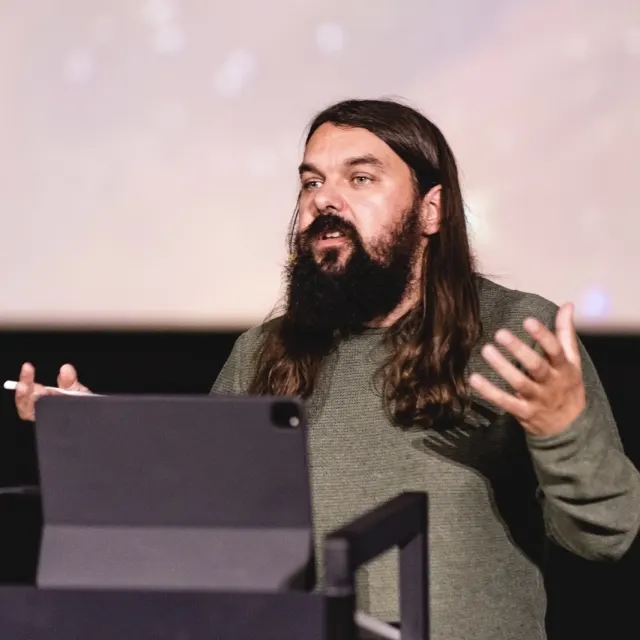
Barry O’Reilly runs the workshop in person. He is the creator of Residuality Theory.
Barry is a software architect and researcher. He created Residuality Theory – an approach that draws on complexity science and philosophy to help teams build systems that survive unexpected change.
What you’ll take away
Why this workshop
The creator of Residuality Theory runs the workshop in person.
This is not three days of slides. Most of the time is spent on hands-on exercises, problem-solving and discussion.
Not another framework or pattern catalogue. You leave with a new way of analysing and justifying design decisions.
Programme · Advanced Software Architecture with Residuality Theory
The programme is exactly the same as in the editions Barry runs abroad.
Where system complexity comes from and what Residuality Theory is about.
You model stressors and design the architecture of a real system.
You draw component boundaries and test the finished architecture.
Every session combines theory with group exercises, so you apply each technique straight away to a concrete case.

Introduction to the theory
In this talk from NDC Porto 2024, Barry introduces the basics of Residuality Theory. It’s a good starting point before you decide on the workshop.
Watch the talk on YouTubeBooks
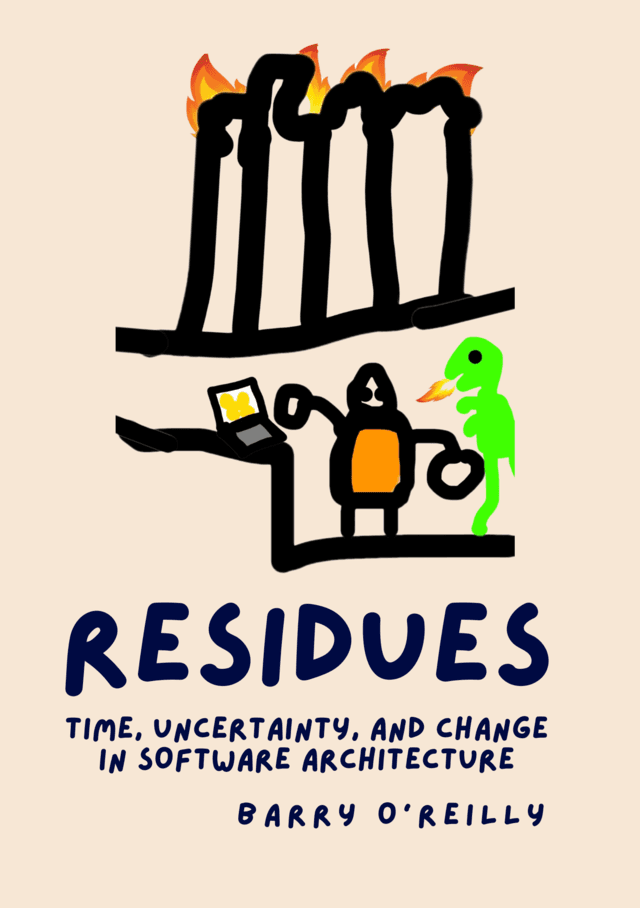
The foundation of the method. To get the most out of the workshop, read it beforehand.
View on Leanpub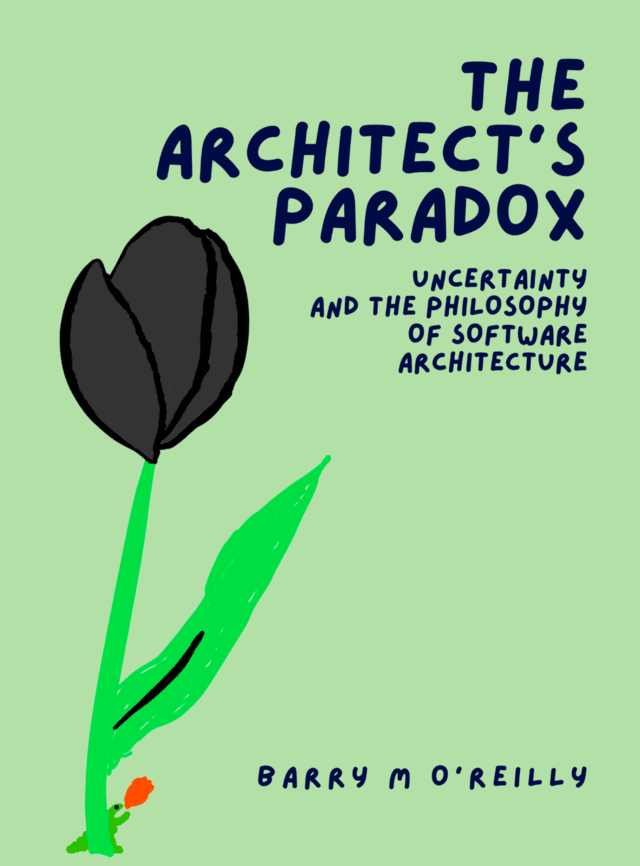
Why the architect’s role is so hard, and how to work with that.
View on LeanpubBoth published on Leanpub.
Details
Pricing and sign-up
Everyone on the interest list gets early access to tickets. Joining is not a booking and doesn’t commit you to anything.
PLN 4,990 + VAT
PLN 6,137.70 incl. 23% VAT · per person6 seats at this priceNeed to make the case to your employer? Programme, price and terms in one PDF.
Download employer informationFAQ
No. Hands-on experience designing systems is enough.
You don’t have to, but you’ll get the most out of it if you read Barry’s book Residues: Time, Change, and Uncertainty in Software Architecture beforehand.
Yes, if you read technical documentation and work with colleagues in English day to day.
Yes. Exercises are done in small groups with other participants. Some people come on their own, others with colleagues.
A laptop with a spreadsheet app. Some of the exercises are done in a spreadsheet.
The price covers the workshop, materials, lunch and coffee breaks. Travel and accommodation are not included. If you’d like recommendations on where to stay near the venue, get in touch – we’re happy to help.
Tickets go on sale soon. Join the interest list and we’ll let you know before anyone else.
No. It is not a booking or an order. When sales open, you’ll hear from us before anyone else, and it’s up to you whether to buy a ticket.
Once sales open, you receive a VAT invoice for your ticket. Companies can pay against a pro forma invoice.
Within 7 days of receiving the pro forma invoice. If you buy your ticket after 15 February 2027, you have 3 days. Your seat is confirmed once payment is received. If payment isn’t received on time, the seat is released to the next person.
Yes, on these terms:
Send your cancellation to contact@arpeggia.studio. Refunds are issued within 14 days.
You can transfer your ticket to a colleague free of charge. Let us know at least 3 days before the workshop, with their name and email. If a new invoice is needed, we’ll issue one.
You get a full refund within 14 days. If the workshop is rescheduled, you can keep your ticket for the new date or get a full refund. We can’t cover travel or accommodation costs, so we recommend flexible, refundable bookings.
The programme and the trainer are exactly the same. Prices are in Polish złoty (PLN) and you receive a VAT invoice.
1–3 March 2027 · Warsaw
Tickets go on sale soon. Early Bird: PLN 4,990 + VAT (PLN 6,137.70 incl. VAT).
Join the interest list →